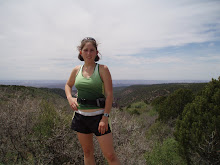
I'm in Jackson, Wyoming. Actually in the Teton Co. Public Library. Camping in the Grand Teton National Forest and I'm quickly running out of internet time.
My digital camera needs servicing at Olympus because Moab dust got in the lens so I have no new photos.
I'll post more tomorrow.
There are herds of buffalo grazing by the campsite. How cool!!
Thursday, June 5, 2008

Friday, May 23, 2008
desert dust
I've been in Moab, Utah for five days now. One shower and five dusty nights' sleep later I am adjusting to life in the field.
I left Ithaca, NY early Sunday morning with Rob Raguso (my advisor). I brought a daypack, a backpack, and a duffle bag with my tent, sleeping bag, and thermarest. We flew out of Ithaca to Philly to Denver to Grand Junction, Colorado. The flight from Denver to Grand Junction was amazing because we were in a small plane flying low over the Rockies. We flew across the country to study a native wildflower, the evening primrose (Oenothera caespitosa).
 I have never been to western Colorado or Utah. Rob and I were picked up from the airport by Holly, a graduate student in the lab. The drive from Grand Junction to Moab was incredible. We drove past signs for Dinosaur National Monument, past Castle Rock, and along the Colorado River to ourcampsite. Along the way I was lucky enough to spot a female pronghorn (Antilocapra americana).
This photo is a bit upriver from our campsite. You can see the la Sal mountains in the background. This road is Highway 128 and it takes you into Moab. Arches National Park is a fifteen minute drive away.
We met up with the rest of the team, said our hellos, and caught up on recent events. We have a large crew: two undergrads (me and Jay), a recent college graduate (Annie), an graduate student (Holly) and two post-docs (Derek and Cristian), a P. I. (Rob), and a visiting scientist (Krissa Skogen).
Jay, Annie, Derek and Cristian have been in Moab since mid-April. Jay is a student at Colorado College and Annie graduated from the University of South Carolina a year ago and was a member of the Raguso lab as an undergrad at USC.
O. caespitosa is a night-blooming plant. We observe the plants in the early morning and in the evening. There are two subspecies of caespitosa found in Moab: O.c. navajoensis and O.c. marginata. We just found O.c. marginata this field season. O.c. navajoensis is found on roadsides and in disturbed areas so our focal populations are off the side of H-128 and some dirt roads going into canyons.
 This is a picture of Annie doing observations out at one of our field sites.
The wildlife out here is incredible. Our flowers are visited by bees(Xylocopa sp., Anthophora sp., and Lasioglossum sp.) and a hawkmoth species (Hyles lineata). On a side note, I watched a mutillid meander in front of my feet two mornings ago and there are raphidids everywhere when the evenings are hot.
Rob left this morning and the weather is awful. It was a hundred earlier in the week and now it is in the fifties and raining. I was able to run up in the la Sal mountains earlier in the week and we're going to try to get to Arches National Park this afternoon if it lets up and I'll try to get in a run there too.
It's time to get back to work to get ready for tonight. Here's one last photo of a rainbow from Wednesday night. Views like this make living in a tent with no running water in the desert worth it.

I left Ithaca, NY early Sunday morning with Rob Raguso (my advisor). I brought a daypack, a backpack, and a duffle bag with my tent, sleeping bag, and thermarest. We flew out of Ithaca to Philly to Denver to Grand Junction, Colorado. The flight from Denver to Grand Junction was amazing because we were in a small plane flying low over the Rockies. We flew across the country to study a native wildflower, the evening primrose (Oenothera caespitosa).
 I have never been to western Colorado or Utah. Rob and I were picked up from the airport by Holly, a graduate student in the lab. The drive from Grand Junction to Moab was incredible. We drove past signs for Dinosaur National Monument, past Castle Rock, and along the Colorado River to ourcampsite. Along the way I was lucky enough to spot a female pronghorn (Antilocapra americana).
This photo is a bit upriver from our campsite. You can see the la Sal mountains in the background. This road is Highway 128 and it takes you into Moab. Arches National Park is a fifteen minute drive away.
We met up with the rest of the team, said our hellos, and caught up on recent events. We have a large crew: two undergrads (me and Jay), a recent college graduate (Annie), an graduate student (Holly) and two post-docs (Derek and Cristian), a P. I. (Rob), and a visiting scientist (Krissa Skogen).
Jay, Annie, Derek and Cristian have been in Moab since mid-April. Jay is a student at Colorado College and Annie graduated from the University of South Carolina a year ago and was a member of the Raguso lab as an undergrad at USC.
O. caespitosa is a night-blooming plant. We observe the plants in the early morning and in the evening. There are two subspecies of caespitosa found in Moab: O.c. navajoensis and O.c. marginata. We just found O.c. marginata this field season. O.c. navajoensis is found on roadsides and in disturbed areas so our focal populations are off the side of H-128 and some dirt roads going into canyons.
 This is a picture of Annie doing observations out at one of our field sites.
The wildlife out here is incredible. Our flowers are visited by bees(Xylocopa sp., Anthophora sp., and Lasioglossum sp.) and a hawkmoth species (Hyles lineata). On a side note, I watched a mutillid meander in front of my feet two mornings ago and there are raphidids everywhere when the evenings are hot.
Rob left this morning and the weather is awful. It was a hundred earlier in the week and now it is in the fifties and raining. I was able to run up in the la Sal mountains earlier in the week and we're going to try to get to Arches National Park this afternoon if it lets up and I'll try to get in a run there too.
It's time to get back to work to get ready for tonight. Here's one last photo of a rainbow from Wednesday night. Views like this make living in a tent with no running water in the desert worth it.

Subscribe to:
Posts (Atom)